Best Emergency Kit for Families 2026: Pre-Built Bags vs Build Your Own
Sustain Supply 4-Person is the best emergency kit family pick for pre-built convenience. Build your own and beat it on quality. Jeff's breakdown.

Practical home resilience for normal families. No bunkers, no ideology. Just sensible preparation that saves money and stress when things go sideways.
Just so you know, some links on this page are affiliate links. If you buy something via them, we get a small kickback. You don't pay more, but it helps keep this independent.
Not sure what to buy? Take the quiz.
Find My SetupPlenty of cheap pre-built emergency kits are worse than they look: a foil blanket with a corner already torn, a whistle that makes no sound, two glow sticks from what looks like a 2009 production run, and no torch at all.
The usual pattern is buying one for around £85, thinking the job is done, and sticking it under the stairs. It is not the job done.
Open one a year later to check it and you often find the food bars expired, a water pouch with a pinhole leak, and three included items nobody can work out the purpose of.
That is the pre-built kit experience in a lot of cases. Not always. Some kits are genuinely well-specced and properly assembled. But most families have no way to tell the good ones from the bad before they buy.
This guide is my attempt to sort that out.
In a Rush
For a US family: the Sustain Supply Comfort4 is the pre-built kit we would actually buy. It includes a portable stove, proper backpack, and two water options. Around $200 for 4 people.
Budget option: **Ready America 72-Hour Kit** at around $65 — decent contents, no frills, widely available.
For food only (to add to your own bag): **4Patriots 72-Hour Kit** at around $45.
Pre-Built vs Build Your Own: The Honest Trade-Off
There is no objectively correct answer. The right choice depends on your household.
Pre-built kits make sense if: - You will not assemble a kit otherwise — a mediocre kit now beats a perfect kit you never build - You want to give one to elderly parents or adult children who need something turnkey - You are buying a kit for somewhere you are not (a car, a workplace, a holiday home) - You have a specific deadline — a trip approaching, a storm forecast
Build your own makes sense if: - You want to tailor it to your household (medical needs, dietary restrictions, kids' preferences) - You want better quality components than pre-built kits typically include - You are prepared to actually spend time on it (not just saying you will) - You want to spend less money for equivalent or better contents
The honest version of the build-your-own calculation: most people who intend to build a kit end up not doing it. If that sounds like you, buy a pre-built kit and be done with it. Imperfect and real beats perfect and theoretical.
our Pre-Built Picks
Best Overall: Sustain Supply Comfort Kit (4 Person)
The Sustain Supply Comfort4 is the kit I would buy if I wanted a pre-built option for a family of four. The reason it beats the competition at this price point is the portable stove. Almost no kit at this price point includes one. Everything else about the kit is solid — a proper backpack rather than a tote bag, survival straws as well as water pouches (two independent water options), and enough food for 72 hours.
It sits at the premium end of pre-built kits. That is more than budget alternatives, but the component quality justifies it. The backpack alone would cost a fair amount to buy separately.
What it includes: 24 emergency food servings, 48 water pouches, 4 survival straws, 8 SnapLights, LED lantern, flashlight, first aid kit, 4 emergency blankets, bath wipes, portable stove, bowls and utensils, firestarter, tinder, and 2 whistles.
Who it is for: families who want one purchase that handles the entire job and are not willing to spend time sourcing components.
Best Budget: Ready America 72-Hour Kit (4 Person)
The Ready America kit is what most families find when they search for an emergency kit. It sits at the budget end and earns its place: the contents are honest, the bag is usable, and it will cover 4 people for 72 hours at a basic survival level.
What it includes: first aid kit, 4 survival food bars, 24 water pouches, 4 emergency survival blankets, dust masks, nitrile gloves, ponchos, whistle, and light sticks. No stove, no radio, no torch beyond a basic light stick.
The gaps are predictable. Add a torch, a hand-crank radio, and a power bank before relying on this kit. But at the budget tier it is a legitimate starting point, and the first aid kit is actually decent.
Who it is for: families on a tight budget who want something now; a starter kit to supplement over time; a secondary kit for a car or workplace.
Food-Focused Option: 4Patriots 72-Hour Survival Food Kit
4Patriots is food only — no bag, no first aid, no equipment. We include it because a lot of families already have a bag but want to upgrade the food. The standard emergency food bars that come with most kits are edible but joyless. 4Patriots makes proper freeze-dried meals (20 servings, designed to last 25 years) that your family will actually eat in a stressful situation.
At around $45, this is an excellent food upgrade for any existing kit. Add it to the Ready America kit and you have substantially better nutrition than either provides alone.
Who it is for: families upgrading the food component of an existing kit; anyone building DIY who wants better meals than commercial bars.
Premium Direct Option: Survival Cat
Survival Cat do not sell through Amazon — they run a direct programme at their own site. Their 4-person family kit costs around $129 and the reviews are consistently positive for content quality and packaging. If the Amazon options do not suit you, they are worth a look. Apply to their affiliate programme separately if you want to earn on referrals — they offer 20%, the highest rate in the emergency preparedness category.
Best DIY Build: What we Would Buy Separately
If you are going to assemble a kit yourself, here is what I would buy for a family of four.
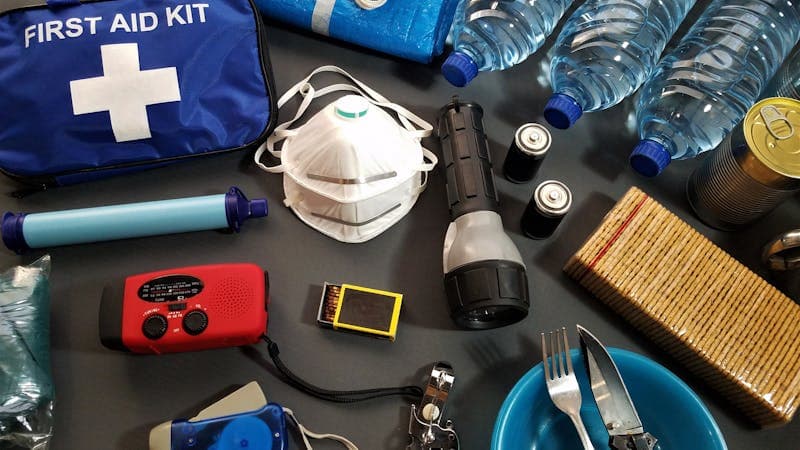
Water: 12–16 litres minimum for 3 days (4 litres per person per day for drinking and basic hygiene). Commercial water pouches work well for a bag; 5-litre bottles work better for a home cache. See the 72-Hour Emergency Kit Checklist for specific quantities.
Food: Tinned food from your existing pantry plus a box of energy bars. No need to buy specialist emergency food for a starting kit. Check use-by dates and rotate.
Communication: A hand-crank radio. See Best Emergency Radio 2026 for my recommendations. This is the most commonly missing item in bought kits.
Light: A decent head torch per adult — hands-free matters in the dark — plus spare batteries.
First aid: A pre-assembled first aid kit is quicker than sourcing components. The one in the Ready America kit is adequate for basic needs.
Power: A power bank (10,000–20,000mAh) for phones and small devices. Critical for communication in extended outages.
Documents: Photocopies of passports, insurance, medication lists, and £50/$50 in cash in a waterproof bag. Keep this updated annually.
What Every Family Kit Must Have
Pre-built or DIY, these are the non-negotiables.
Water — minimum 1 gallon (4 litres) per person per day. Water pouches for the bag; a larger cache at home.
Food for 72 hours — calorie-dense, no-cook options. Your family will eat under stress; the food needs to be edible, not just technically nutritious.
Communication device — a hand-crank or battery radio to receive emergency broadcasts when the internet and phone networks are down.
Light — at least one torch per adult with spare batteries. A head torch is more useful than a handheld torch when you need your hands free.
First aid — a proper kit with bandages, antiseptic, blister plasters, and a foil blanket.
Copies of critical documents — passports, medication lists, insurance, emergency contacts, and local maps.
Cash — small denomination notes. Card machines do not work in extended power cuts.
What to Skip
Pre-built kits often include items that look impressive but are low value in practice.
Multi-tools of unknown quality: cheap multi-tools are harder to use than nothing. If you want a multi-tool, buy a Leatherman Wave separately.
Glow sticks as primary light: useful as a supplement but not a substitute for a torch. They are one-use, time-limited, and produce less light than any decent LED torch.
Items you cannot identify: if you open a kit and find something you do not know how to use, it is weight with no value. Remove it.
Customising for Kids, Pets, and Medical Needs
Children: Include comfort items — a small familiar toy, favourite snacks in sealed packaging, a printed family photo. Stress is hard for children; familiar objects help. Include children's paracetamol or ibuprofen and any regular medications. A small activity pad for extended waits.
Pets: Water for pets, a 3-day supply of their regular food sealed in a bag, a spare collar and lead, vaccination records, and a photo of your pet with you in case of separation.
Medical needs: Prescription medications at least 7 days beyond the 72-hour minimum. Medical equipment (inhalers, EpiPens, glucometers) plus extra supplies. A printed medication list with dosages. Alert cards if relevant.
Frequently Asked Questions
How much should I spend on an emergency kit?
For a family of four, a useful kit costs £80–£200 assembled or $65–$200 pre-built. Spending more than $200 pre-built is usually unnecessary — the additional cost goes into marketing rather than contents. The Ready America kit at the budget end covers the basics. The Sustain Supply kit at the top of that range does the whole job.
How often should I check and rotate my kit?
we checks hers every six months, timed with the clock changes. Check food and water use-by dates, replace anything expired, update medications, and check battery-powered devices. The whole process takes about 20 minutes.
Should I have one kit or several smaller ones?
For most families: one primary home kit plus a smaller car kit per vehicle. The car kit does not need to be comprehensive — water, a basic first aid kit, emergency blankets, a torch, and a power bank covers most roadside emergencies.
What is the difference between a 72-hour kit and a bug-out bag?
In practical terms: very little. A 72-hour emergency kit sustains you in place or during short-term evacuation. A bug-out bag implies longer-duration evacuation with survival-oriented gear. For most families, a well-built 72-hour kit is what you actually need. The bug-out bag framing attracts expensive survivalist gear that does not serve suburban family emergencies.
Do I need a separate kit for the car?
If you drive regularly, yes. A car kit does not need to be comprehensive: water, a basic first aid kit, emergency blankets, a torch, and a power bank covers most scenarios. The main one is being stranded in cold weather or far from home.
Related Guides
The full checklist: 72-Hour Emergency Kit Checklist for Families Planning beyond the kit: How to Make a Family Emergency Plan Emergency radio: Best Emergency Radio 2026 Power backup: Best Solar Generator for Home Backup 2026
Not sure what to buy?
Tell me about your home and I'll tell you which resilience gap to close first.
Find My SetupRelated Guides
Not sure which guide to read first?
Take the quiz — Jeff will tell you which gap to close first based on your home and budget.
Take the Quiz — It's FreeNo email required